We were asked to improvise around our personal interests within our developing practise this year. We did 4 lots of 2 minute dances in between writing about our experiences in our journals. I found that each time I improvised I found new interests and further developments- here are some of the rough notes I recorded in my journal during the class:
1. Loose jaw. Free neck. Head- gravity, air, focus. Roll, stretch. Internal- External. Utilising the whole body. Full exploration. freedom.
2. Hips, pelvis, jaw- Free. Rolling- taking to extreme- where else can this happen in the body? How can gravity support this? taking the limbs to extremes.
3. Folding every possible area that can be. Balance. Gliding. How long can the fold go before having to give into it and give into gravity. ripples. Being seen. Being heard. How can this be possible at all times, even when focusing internally?
4. Loose limbs. Light touch- leaving the floor. Soft. Sponge. Transition into shapes. Soft air over limbs.
Saturday, 2 March 2013

Technical phrase clases with Andrea Barzey during Term 2
Throughout the technical phrase classes this term with Andrea I have been aiming to focus on these aspects within my moving:
I noticed that after practising the phrases over the few weeks then allowed these things to come more naturally to my movement. I think this is due to not having to over think what I am actually doing movement wise when I don't know the phrase fully, which I often find distracts me from finding other important intentions within the body while dancing.
- Leading with the head/neck
- Flatness in the back
- Fluid movements that melt one into the next
- Not over preparing the hands- particularly for jumping phrases
- Articulating though the feet- again mainly when jumping and travelling
- Energy and power within travelling sequences
I noticed that after practising the phrases over the few weeks then allowed these things to come more naturally to my movement. I think this is due to not having to over think what I am actually doing movement wise when I don't know the phrase fully, which I often find distracts me from finding other important intentions within the body while dancing.
Friday, 15 February 2013
The CONTRALATERAL pattern of movement
- Opposition of limbs
- Finding diagonals through the centre
- Body in 4 quadrants
- Spiral in our movement
- Mainly in mammals- fish and lizards a little
- Mammals have a different muscular skeletal organisation, so the belly is more easily off the floor
- All senses are fully operational
- Vocal communication- free head and neck
- Eyes and ears fully engaged with the world
- Reaching for objects for a baby encourages motion and vocals into the environment
- Babies turn towards sound, and go backward in space to do so sometimes

Amy Voris wake up sessions
For the past few weeks, and the coming weeks until the end of term I am taking part in a movement session with Amy Voris. The main focus is on Authentic Movement. Janet Adler, Joan Chodorow and Mary Stark- Whitehouse are the pioneers of this.
These are the principles we first worked with...
In the next session we focused on these principles....
In the following session we looked at...
These are the principles we first worked with...
- Working in a Diad (working in pairs)
- Moving from sensing within the body
- Propriosation (tracking the body)
- Sensation
- Emotion
- Imagery
In the next session we focused on these principles....
- Intention of closing eyes and surrender to the possibility of being moved
- Active imagination of movement
- Idea of the unconscious- what we don't yet know about ourselves in with world
- Free association practices
- Moving and being moved
- Notion of witnessing- seeing and being seen
- Experiencing and watching
- Making the unconscious, conscious
- When moving with the idea of witnessing the body I felt un attached from it. Particularly in the legs, because I felt like I was 'watching them' so I felt like it wasn't me moving them.
In the following session we looked at...
- The philosophical approach to witnessing
- Active listening
- The art of witnessing
- Watching things come and go
- WEIGHT! Giving into weight and the idea of a gravitational pull to the floor
Thursday, 24 January 2013
Cecila's workshop - number 2
Discussing the boundaries of Dance Movement Therapy:
- Supervision- comes as part of the practice
- Behaviour- making sure it's appropriate at all times. verbal. Confidentiality- making sure the clients know that it is confidential before they begin
- Property and space- considering personal space and environmental space. Keeping the space the same everytime so the client doesn't get confused or distracted by the space. keeping it clear and clean of objects etc to allow room for movement and feelings of safety
- Energy- keeping the right amount of energy throughout the session. being engaged but not overly energetic
- Time keeping- Both client and therapist must be on time every session to gain the most out of the session
- Therapist must not reveal anything about themself to their client, so they cannot make assumptions etc
Cecilia's workshop continued
Talking about Dance Movement Therapy and creative arts therapy we took part in tasks in groups where we took the four emotions, happy, sad, fear and anger and applied them to a group of people and came up with a task which would allow the people to use movement to express those emotions creatively.
We decided to tell a story about the weather and the group could join in with the sounds and movement...
We decided to tell a story about the weather and the group could join in with the sounds and movement...
- Thunder storm (Anger) - stomping feet and clapping hands and noises using the mouth.
- Rain (sad) - finger tapping on a surface to create noise and finger actions
- Wind storm (fear) - shivering/ rubbing the body to create warmth and whistling
- Sunshine (happy) - lifting the head, circular motions with the hands and arms, bird actions and noises
Tuesday, 22 January 2013
Cecilia Macfarlane workshop
Defining the differences between Dance Movement Therapy (DMT) and Therapeutic...
This is particularly interesting to me as I am studying DMT for my dissertation currently.
This is particularly interesting to me as I am studying DMT for my dissertation currently.
Dance Movement Therapy
|
Therapeutic
|
· Unity of mind and body
· Connecting the physical to the psychological
· Relationships and contact
· Expression of inner emotions, feelings and memories through movement and dance
· Body does the speaking
· Helps with general well-being
· Can be for people with mental illnesses, physical disabilities, blind or deaf people, the elderly, children, adults.
|
· Relaxing
· Inner connections
· Doesn’t have to be therapy to be therapeutic
· Talking to people
· Touch/ contact
· Senses- smell, music, colours etc
· Colouring
· Retail therapy
|
Friday, 28 December 2012
Whilst researching for my dissertation, I found a quote within a book about creative arts therapy which I find really inspirational about the movements we create as dance artists...
'The movements that we make in our dancing sessions are all part of the dance of our lives. The movements that we express in accompaniment to music are movements from our being alive; they express our living presence. They are movements to be treasured. They are expressions of who we are and they effect the people we dance with. They ripple outwards. They connect us to eachother. dancing weaves us together.'
'The movements that we make in our dancing sessions are all part of the dance of our lives. The movements that we express in accompaniment to music are movements from our being alive; they express our living presence. They are movements to be treasured. They are expressions of who we are and they effect the people we dance with. They ripple outwards. They connect us to eachother. dancing weaves us together.'
Wednesday, 19 December 2012
It's very imortant when you do a movement that your attention (which is what is stimulating you) and your intent (which is what you want to do in relation to that stimulation) align up with the movement that you're doing. It's a key.
Bainbridge- Cohen, Bonnie (1993) Sensing, feeling and action. Northampton.
Bainbridge- Cohen, Bonnie (1993) Sensing, feeling and action. Northampton.
Sunday, 16 December 2012
Overview of the developmental patterns we have learnt during term 1
These patterns have been explored as part of our movement studies module during term 1. I can now apply these to every movement class as they all related to my movement processes.
Cellular breathing: Expansion and contraction of each cell of the body in internal respiration. Integrates and aligns the physical body. Present throughout life form conception, as it underlies breathing and all life processes. We used hands on activities, with focus on the breathing and moving with the idea of condensing and expanding.
Navel radiation: Integrates of the body into the centre through the navel. Starfish pattern. Present in utero. We explored this by focusing on the starfish pattern on the floor and moving with the idea of 6 limbs which all move in unison, joining at the centre. I feel I connect to this pattern particularly well as I like the starfish imagery and can find support from the floor while I do so.
Mouthing: the head rocks on the lower jaw; nursing action of the infant. Sea squirt. Dominant During early infancy. We used a rolling action while a partner activated the mouthing awareness by stroking the side of the face from the mouth, which led the rolling. I thought I would want to go the other way from the hand and reject the action but I actually wanted to roll towards it in response to the action.
Pre-spinal: Integrated movement between head and torso to the tail; initiated in the 'soft spine' of the spinal cord and the organs. underlies spinal patterns. We moved with the soft spine image yielding and softening into the floor, which I was surprised to discover I use a lot during my improvisational moving, but never properly realised it was directly related to this pattern.
Spinal push from head, and spinal push from tail: Integration of the spine from head to tail, initiated in the musculoskeletal structure. I also frequently use this focus when moving in classes as we often focus on the way movement can initiate from the head or tail to enable leading from one movement to the next.
Spinal reach from head, and spinal reach from tail: Movement of the spine through space, led by the head or tail; enables change in levels. Initiation first from mouth; other senses develop in the first few months. Again, like the spinal push, I also often use the reaching pattern as ways to initiate movement.
Hartley, L (1989) Wisdom of the body moving. USA: North Atlantic Books.
Cellular breathing: Expansion and contraction of each cell of the body in internal respiration. Integrates and aligns the physical body. Present throughout life form conception, as it underlies breathing and all life processes. We used hands on activities, with focus on the breathing and moving with the idea of condensing and expanding.
Navel radiation: Integrates of the body into the centre through the navel. Starfish pattern. Present in utero. We explored this by focusing on the starfish pattern on the floor and moving with the idea of 6 limbs which all move in unison, joining at the centre. I feel I connect to this pattern particularly well as I like the starfish imagery and can find support from the floor while I do so.
Mouthing: the head rocks on the lower jaw; nursing action of the infant. Sea squirt. Dominant During early infancy. We used a rolling action while a partner activated the mouthing awareness by stroking the side of the face from the mouth, which led the rolling. I thought I would want to go the other way from the hand and reject the action but I actually wanted to roll towards it in response to the action.
Pre-spinal: Integrated movement between head and torso to the tail; initiated in the 'soft spine' of the spinal cord and the organs. underlies spinal patterns. We moved with the soft spine image yielding and softening into the floor, which I was surprised to discover I use a lot during my improvisational moving, but never properly realised it was directly related to this pattern.
Spinal push from head, and spinal push from tail: Integration of the spine from head to tail, initiated in the musculoskeletal structure. I also frequently use this focus when moving in classes as we often focus on the way movement can initiate from the head or tail to enable leading from one movement to the next.
Spinal reach from head, and spinal reach from tail: Movement of the spine through space, led by the head or tail; enables change in levels. Initiation first from mouth; other senses develop in the first few months. Again, like the spinal push, I also often use the reaching pattern as ways to initiate movement.
Hartley, L (1989) Wisdom of the body moving. USA: North Atlantic Books.
Tuesday, 11 December 2012
''The whole body is connected, all parts are in relationship. Change in one part changes the whole. When we acknowledge relationship between parts of the body, it makes possible both differentiation of the parts and integration of the whole.''
Hackney, peggy (2002) Making connections: Routledge: london
Hackney, peggy (2002) Making connections: Routledge: london
Monday, 10 December 2012
Improvisation tasks 3rd December
Radiating from the centre:
- Fluid
- limbs
- integration
- radiation
- Lines
- spine
- Air
- Weight
- Tipping
- Balancing
Notes to remember/ recognise by Katye Coe f Improvisation classes
- Interior landscapes within space
- Ways of imagining space in the leg joints- create a sense of being lighter and more fluid and flexible
- Integration from centre to periphery- holding onto our internal space while reaching out or expanding
- Physical activity isn't just an idea or 'like' something else, dancing is really happening in our bodies
- making ourselves available, and knowing how to do so on all levels when working
- Gravity- what is it and what does it mean for us? How can I allow gravity to fall through every part of me all of the time?
Dance and the moving image
One of our modules this term has been Dance and the moving image, which required creating a short film and showing it to a live audience. We made a film which was filmed and shown in the same cafe. We wanted to create something that was very pedestrian and fit in with the cafe environment. We played the piece on laptops, phones, ipods, and a screen we had placed withinn a book, which we placed on tables around the cafe and the audience could sit and watch for as long or little as possible while in the cafe environment. We had the film in silent so the live sound scape within the cafe would compliment the piece, making it as natural as possible. The film involved highlighting and exploring pedestrian actions and behaviours within a cafe, and then developing some of these further to include moments of movement.
Friday, 23 November 2012
Experiential Anatomy
New focuses;
2 Further tubes..
Front of the body- Digestive track
Back of the body- Reminance of the neural tube
Front of the body- Reminance of the notocord
Baby 15-20 weeks = Pre spinal pattern
baby 3-4 months = Spinal pattern
- Mouthing pattern
- Soft spine pattern
- lancelet
2 Further tubes..
- Notocord = Soft. Becomes the spine disks. Pre spinal pattern
- Neurotube = Becomes the brain and spinal cord. Later become protected by bone (skull and spine)
Front of the body- Digestive track
Back of the body- Reminance of the neural tube
Front of the body- Reminance of the notocord
Baby 15-20 weeks = Pre spinal pattern
baby 3-4 months = Spinal pattern
Technique Improvisation 14th November
With both partners moving:
I felt a connection with the hands, warmth,yeilding into the floor, muscles and tissue awareness, relaxation, focus on the back (spine in particular) and heat to tail connection.
- I tracked my partners movement with my eyes open
- Then I carried on tracking the movement eyes closed
- Then we both closed our eyes while tracking
- Then we both had eyes open
- Then we both closed eyes again and tracked each other with our whole bodies not just our hands
I felt a connection with the hands, warmth,yeilding into the floor, muscles and tissue awareness, relaxation, focus on the back (spine in particular) and heat to tail connection.
Contact Improvisation 12th November
Working in partners, we traced our partners movement with our finger tips. First the mover had their eyes closed and spoke about what they were doing/feeling/focusing on while moving and the other had their eyes open and traced their body using the finger tips. I found when I was tracing the body that I focused on the textures I was feeling and to see what parts of the body I could reach, and find patterns being created. However when I was the mover I was focusing on what I could feel and how I could develop my movement in response to what I was feeling.
Then we swapped so the mover had their eyes open and the other person tracing closed theirs. This created a whole new response and reaction to what I was experiencing. I found that when I was tracking the movers dancing I was noticing different textures, layers, patterns and shapes. When swapping roles after this I noticed a change in my moving and focuses as I was then moving in response to what I had just felt, not necessarily what I felt like I wanted to do. This then gave my moving more depth and development and a variety in ways to move.
Then we swapped so the mover had their eyes open and the other person tracing closed theirs. This created a whole new response and reaction to what I was experiencing. I found that when I was tracking the movers dancing I was noticing different textures, layers, patterns and shapes. When swapping roles after this I noticed a change in my moving and focuses as I was then moving in response to what I had just felt, not necessarily what I felt like I wanted to do. This then gave my moving more depth and development and a variety in ways to move.
Monday, 12 November 2012
Contact Improvisation 5th November
Today's class was heavily focussed on the giving and taking of weight with a partner in order to move together with a full body awareness.
We started with hands on graphics, waking up the whole body by massaging, pulling, lifting, taking weight, and moving the body without response from our partner. Then as the hands on became more intense, the partner experiencing it started to allow themselves to move in response. This then developed into both of us moving with each other, but really taking the other persons weight and allowing ours to be taken. This meant thee was a lot of rolling, pulling, and stretching of body parts.
I felt I could relax into movement more, and the partner work as I knew my partner was holding a lot of my weight and we could feel deep into our own and each others muscles.
Found it usefull to focus on the idea of really 'getting underneath'.
We started with hands on graphics, waking up the whole body by massaging, pulling, lifting, taking weight, and moving the body without response from our partner. Then as the hands on became more intense, the partner experiencing it started to allow themselves to move in response. This then developed into both of us moving with each other, but really taking the other persons weight and allowing ours to be taken. This meant thee was a lot of rolling, pulling, and stretching of body parts.
I felt I could relax into movement more, and the partner work as I knew my partner was holding a lot of my weight and we could feel deep into our own and each others muscles.
Found it usefull to focus on the idea of really 'getting underneath'.
Sunday, 4 November 2012
Improvisation class 31st October
After a short warm up improvisation task on our own we worked in partners. We started with one of us moving for 10 minutes and the other witnessing, then swapping and moving in response to what we had seen, twice each. This then developed into just one minute moving each and then 30 seconds each.
I found that moving in response to someone with a diffeent movement style to my own allowed me to think outside the box and take inspiration, ideas, and explorations from their movement. In particular I could focus on the surfaces of the ground, and trying to get every part of my body on the floor. I also played with the idea of touching all parts of my body to sense different aspects of touch such as feelings, textures, and temperatures.
I noticed that during the longer improvisations of 10 minutes, it allowed my movement to be more like an exploration of my body and the space and what my partner had just displayed to me and how I could take those aspects of her moving further. However during the shorter improvisations of 1 minute and 30 seconds it was more like a conversation between us using movement. The faster chang overs allowed us to just respond immediately and let our bodies just react naturally without really thinking into it too much.
I really engaged with this task as I could push my movement boundaries by responding to my partners movement, and using new stimuli to do so. I felt like I had a full body awareness, and still brought in the focus of the breathe and being grounded, and a sense of all the limbs working together into my dancing.
I found that moving in response to someone with a diffeent movement style to my own allowed me to think outside the box and take inspiration, ideas, and explorations from their movement. In particular I could focus on the surfaces of the ground, and trying to get every part of my body on the floor. I also played with the idea of touching all parts of my body to sense different aspects of touch such as feelings, textures, and temperatures.
I noticed that during the longer improvisations of 10 minutes, it allowed my movement to be more like an exploration of my body and the space and what my partner had just displayed to me and how I could take those aspects of her moving further. However during the shorter improvisations of 1 minute and 30 seconds it was more like a conversation between us using movement. The faster chang overs allowed us to just respond immediately and let our bodies just react naturally without really thinking into it too much.
I really engaged with this task as I could push my movement boundaries by responding to my partners movement, and using new stimuli to do so. I felt like I had a full body awareness, and still brought in the focus of the breathe and being grounded, and a sense of all the limbs working together into my dancing.
Core distal movement
Moving from the centre with the idea of the body being like a starfish, everything comes from the navel. 'navel radiation pattern'.. this acnowledges the navel as a significant body point in the body.... equality of limbs... integrated through the centre.
By using a hands on with a partner, attention was brought to the centre of the body, moving out across the length of the limbs. Then moving alone using this idea of the starfish and condensing and expanding from the central point (navel). I found this image easy to connect with, especially after the hands on experience. I felt connected with my centre, and had the feeling that the body moves as a whole and all the limbs are connect and all work together.
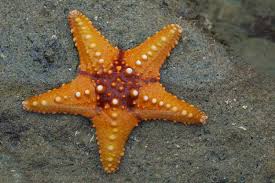
By using a hands on with a partner, attention was brought to the centre of the body, moving out across the length of the limbs. Then moving alone using this idea of the starfish and condensing and expanding from the central point (navel). I found this image easy to connect with, especially after the hands on experience. I felt connected with my centre, and had the feeling that the body moves as a whole and all the limbs are connect and all work together.
Subscribe to:
Posts (Atom)